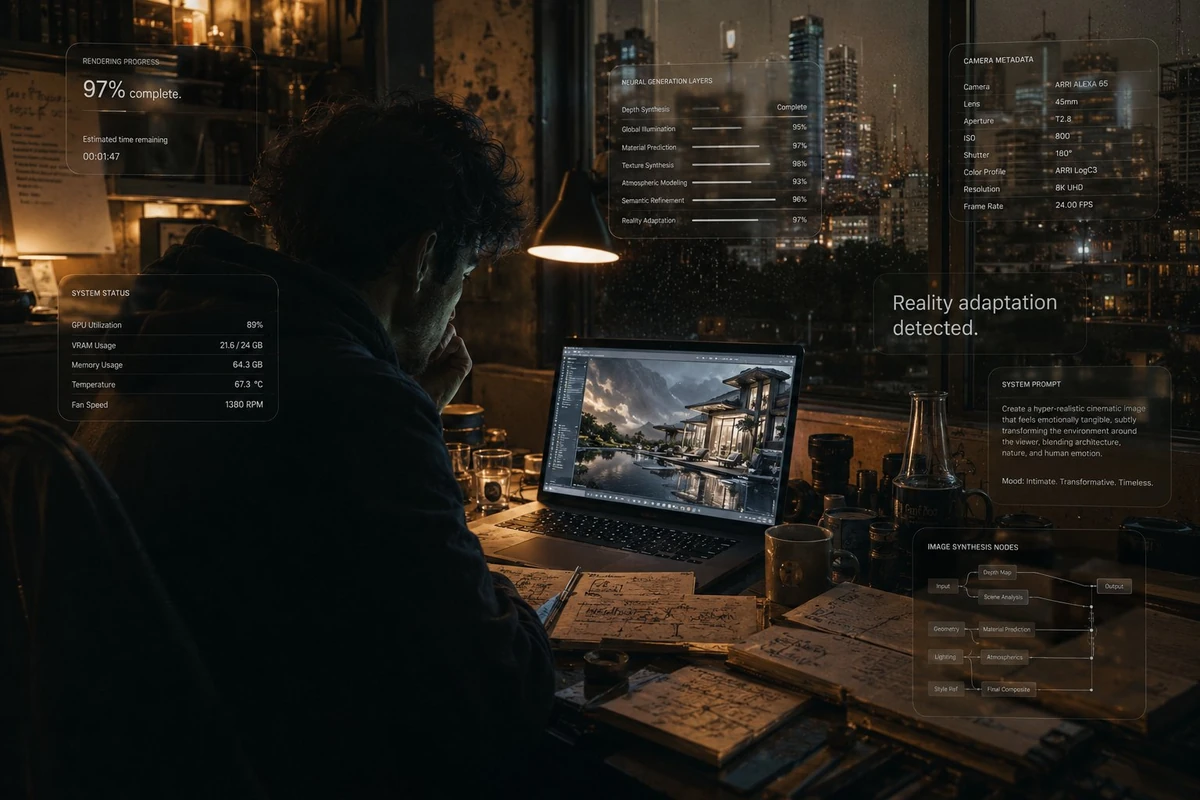
Create an ultra-realistic cinematic visual.
The composition should feel like a moment frozen exactly before a butterfly-effect event silently reshapes someone’s entire life.
SCENE:
A young man sits alone late at night inside a warm dimly lit apartment illuminated only by:
- a laptop screen,
- subtle city lights through rain-covered windows,
- and soft amber desk lighting.
The atmosphere feels:
quiet,
intimate,
psychologically heavy and deeply modern.
On the laptop screen:
an unfinished AI-generated image is rendering slowly.
The render preview itself should look visually revolutionary:
part luxury commercial,
part impossible realism,
part emotional storytelling.
The screen should feel so realistic viewers instinctively zoom into it.
Around the room:
- empty coffee cups,
- handwritten creative notes,
- GPU benchmark tabs,
- scattered camera lenses,
- half-open notebooks,
- subtle signs of obsession and creative burnout.
But the IMPORTANT PART:
The room itself should subtly begin transforming from the AI image being rendered.
Tiny impossible details:
- reflections from the unfinished render appearing physically on nearby objects,
- light from the screen subtly changing the architecture of the room,
- textures near the monitor beginning to resemble generated pixels,
- reality slowly inheriting traits from the AI artwork itself.
The transformation should remain:
subtle,
psychological,
beautiful and believable.
No Marvel effects.
No obvious sci-fi portals.
The realism should feel:
deeply unsettling because it is almost invisible.
Integrated elegantly into the environment should be ultra-premium Liquid Glass-inspired UI overlays:
- rendering progress,
- GPU usage,
- neural generation layers,
- cinematic camera metadata,
- image synthesis nodes,
- subtle typography fragments,
- emotionally restrained system prompts.
The overlays should feel:
minimal,
Apple-inspired,
tactile,
translucent and physically integrated into the scene.
One overlay softly reads:
“97% complete.”
Another:
“Reality adaptation detected.”
The typography should feel understated and luxurious rather than futuristic.
LIGHTING:
Warm cinematic tungsten lighting mixed with soft cold monitor light.
Natural rain reflections across surfaces.
Subtle atmospheric haze.
Realistic screen-light diffusion.
Medium-format photography realism.
CAMERA STYLE:
The image should resemble:
an award-winning cinematic photograph accidentally captured during a moment humanity crossed an invisible line.
Use:
- shallow natural depth of field,
- realistic lens imperfections,
- slight sensor grain,
- subtle handheld framing,
- physically accurate reflections,
- premium low-contrast cinematic realism.
COLOR PALETTE:
warm amber,
graphite black,
soft chrome reflections,
rain-soaked blue-gray,
muted ivory typography and subtle liquid-glass translucency.
MOOD:
creative obsession,
digital loneliness,
quiet ambition,
the butterfly effect of one moment,
and the terrifying beauty of technology becoming reality.
Visual references:
A24 cinematography, Apple Liquid Glass UI philosophy, Leica editorial photography, luxury AI campaigns, emotionally intelligent sci-fi realism and modern creator culture aesthetics.
The image should feel so believable that viewers debate whether:
- it is real photography,
- a film still,
- or AI-generated.
Hyper-realistic cinematic masterpiece, emotionally immersive realism, premium editorial composition, tactile UI aesthetics, impossible-but-believable atmosphere, award-winning visual storytelling, IMAX-quality detail, 8K.