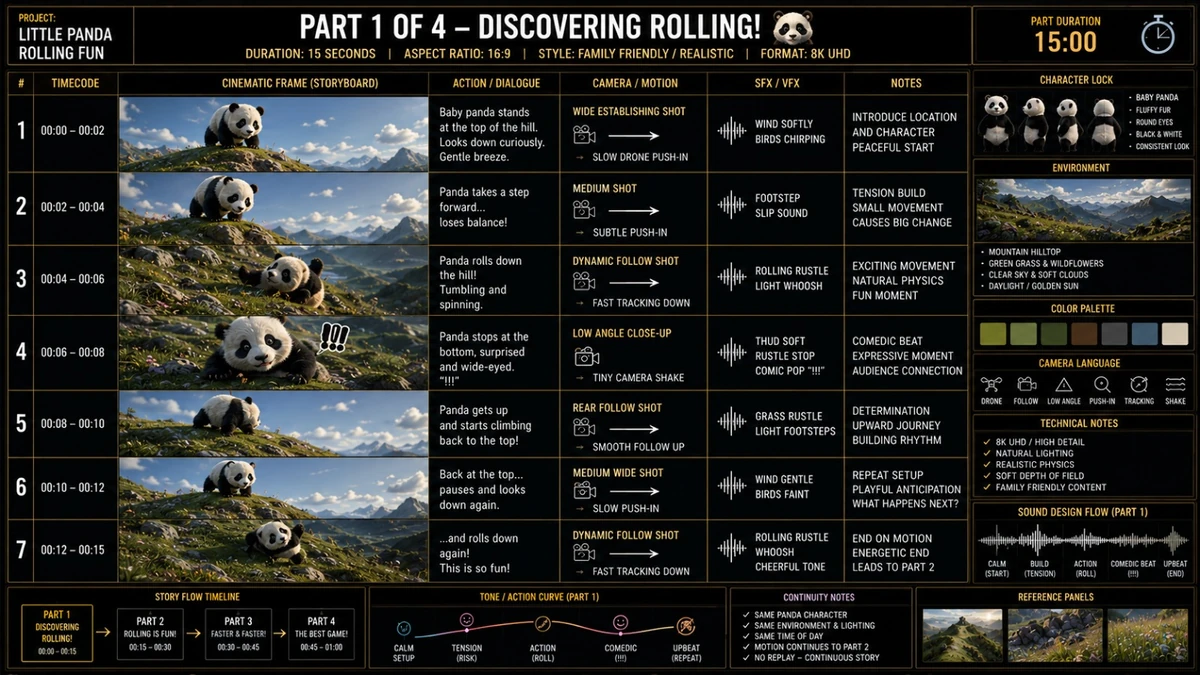
SEEDANCE 2.0 — SAFE VERSION — PART 1
Create an EXACTLY 15-second premium stylized 3D family-animation scene titled “Baby Panda Discovers Rolling.” The panda is a clearly fictional animated character, not a real animal. The scene is playful, gentle, supervised in tone, and completely free of danger, pain, fear, injury, or distress.
Minimum 8K quality, ultra sharp, high detail, clean textures, stable face, stable fur pattern, no blur, no compression artifacts.
STYLE: High-end cinematic 3D animation, warm family-friendly tone, soft expressive character acting, realistic gravity and body weight, polished theatrical lighting, viral but safe camera angles.
CHARACTER LOCK: One small animated baby panda, same face, same black-and-white fur pattern, same round proportions, same size, same expression style in every shot. The panda remains cheerful, curious, relaxed, and unharmed.
ENVIRONMENT LOCK: A very low rounded grassy mound in a protected meadow, only a gentle slope, thick soft grass, no cliff, no rocks in the path, no sharp objects, no road, no water, no height danger. Warm late-afternoon sunlight from camera-left. Same terrain, same lighting, same screen direction.
SCENE FLOW — EXACTLY 15 SECONDS — EXACTLY 7 SHOTS:
1. 0.00–1.80s — Low-angle medium-wide shot. The baby panda stands on top of the small soft grassy mound, smiling and curious. Slow gentle push-in.
2. 1.80–3.40s — Side close-up. One paw softly slides a few centimeters on smooth grass. The panda slowly tilts with a playful surprised expression, never frightened.
3. 3.40–5.80s — Ground-level tracking shot. The panda performs one gentle controlled side-roll downhill. Natural gravity, soft body compression, thick grass cushioning every contact.
4. 5.80–7.80s — Smooth overhead shot. The panda completes one more slow playful rotation on the same gentle slope. No fast spinning, no hard impact.
5. 7.80–9.70s — Front low camera on flat soft grass. The panda naturally loses momentum and stops safely on its back, paws up, blinking happily. Add a small comic “!” reaction icon only.
6. 9.70–12.50s — Medium follow shot. The panda sits up immediately, cheerful and unharmed, then climbs the short mound with small believable steps and firm paw contact.
7. 12.50–15.00s — Rising side tracking shot. The panda reaches the top, looks excited, lowers one shoulder, and begins a second gentle playful roll. End at the first safe forward lean for seamless continuation.
CAMERA: Smooth push-in, side close-up, low tracking, overhead reveal, front reaction shot, uphill follow, rising transition shot. Stable camera, no shake, no aggressive zoom, no extreme lens distortion.
MOTION & PHYSICS: Believable weight, realistic gravity, soft grass resistance, correct paw contact, stable anatomy, gentle speed, no sliding feet, no uncontrolled tumbling, no collision.
LIGHTING: Warm golden light from camera-left, soft sky fill, consistent shadows, subtle rim light, bright friendly color grading.
AUDIO: Clean cinematic audio, soft breeze, grass rustle, light padded “poof” sounds, tiny happy panda chirp, playful music, no distress sounds.
ENDING / FRAME LOCK: Preserve exact camera height, lens, lighting, motion direction, mound position, and panda position for the next clip.
NEGATIVE: real animal harm, danger, fear, pain, crying, injury, cliff, steep hill, rocks in the rolling path, hard impact, violent fall, fast uncontrolled spinning, distress, rescue scene, predator, duplicate animal, broken anatomy, extra limbs, face change, fur change, teleporting, camera shake, blur, flicker, dark horror mood, realistic wildlife documentary danger, text-heavy overlays, subtitles, watermark.